Home
Pool Store
Your Pool Party
Ask The Expert
Pool Q&A Forum
News & Views
Maintenance Pool Start Up
Winterization
Pool Chemistry
Problems
Pool Algae
Clear It Up
Pool Tips
Pool Chemicals
Pool Heating
Pool Accessories
Pool Filters Sand Filter
Cartridge Filter
DE Filter
Pools N' Stuff Cost & Financing
Inground Cost
Aboveground
Kinds Of Pools
Inground Liner
Pool Cover Info.
Solar Covers
Pool Paint
Party & Games
Pool Toys
Pool Landscape
Pool Routes
Health & Safety SPF Clothing
Sunscreen
Swimming Safety
Swimmer Health
Safety Net
Child Fence
Misc. Donate
The Pool Blog
Privacy Policy
Submit Questions
About Me
Interviews/Articles

[?] Subscribe To This Site

XML RSS
Add to Google
Add to My Yahoo!
Add to My MSN
Subscribe with Bloglines


Blue-Green Algae

Remove your blue-green algae for good. Use these swimming pool care and maintenance tips to reduce weekly pool maintenance cost for your in ground, above ground and salt water pool.

Algae Removal ~ Chlorine & Calculator

blue-green algae,swimming pool algae,algae in pools,green pool water,green algae pool water

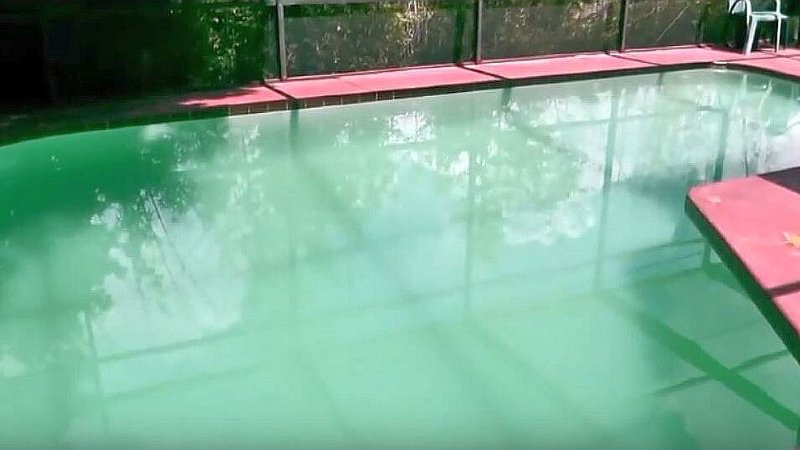
Green Algae Swimming Pool

This type of algae in pool water is usually present in some way, shape, or form in most pools but is so small that it won't cause any swimming pool problems.

As soon as the chlorine, sanitizer, or pool stabilizer level drops, it's off and running for your swimming pool algae. That's why keeping your pool water maintenance will normally keep blue-green algae away to give your the pool perfect for you.

Other pool problems might include:

  • A green algae swimming pool
  • Yellow algae/Mustard algae
  • Pink algae
  • White Water Mold
  • You’ll need to do a good chlorine pool shock and use a swimming pool algae treatment or pool algaecide.

    A good choice would be a Chelated Copper Algaecide because it is pretty effective and cost efficient. Chelated means it's stabilized so it shouldn't cause any staining of the pool plaster.

    blue-green algae,swimming pool algae,algae in pools,green pool water,green algae pool water

    Type Of Green Pool I Used To Clear Up

    Blue-Green Algae/Green Swimming Pool Water Prevention

    Proper balance of all your swimming pool water chemistry will greatly reduce the opportunity for blue-green algae pool water.


    blue-green algae,swimming pool algae,algae in pools,green pool water,green algae pool water

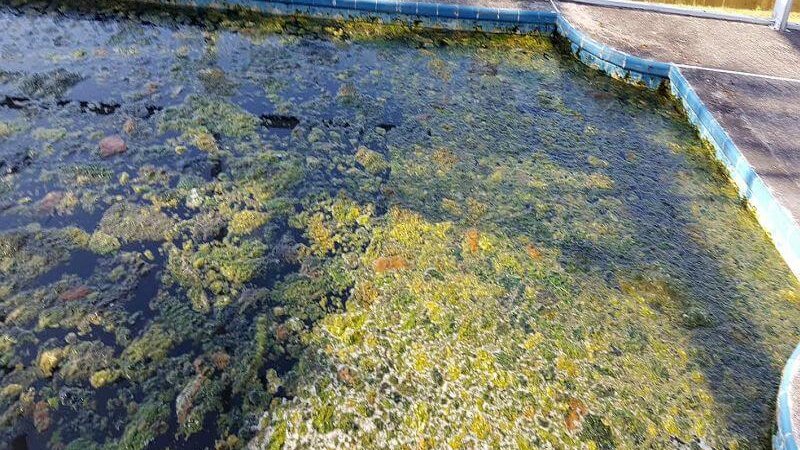
    And This Algae Swimming Pool


    Remove Blue-Green Algae & Green Pools

    SAFETY FIRST
  • Always take the proper precautions in dealing with these types of pool chemicals and read the manufacture’s labels.
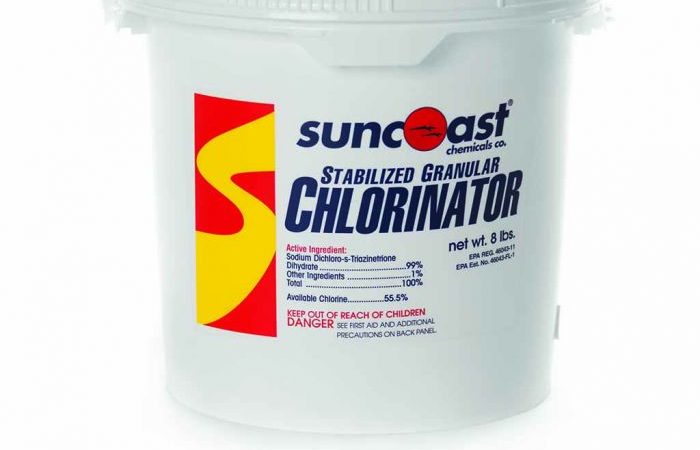
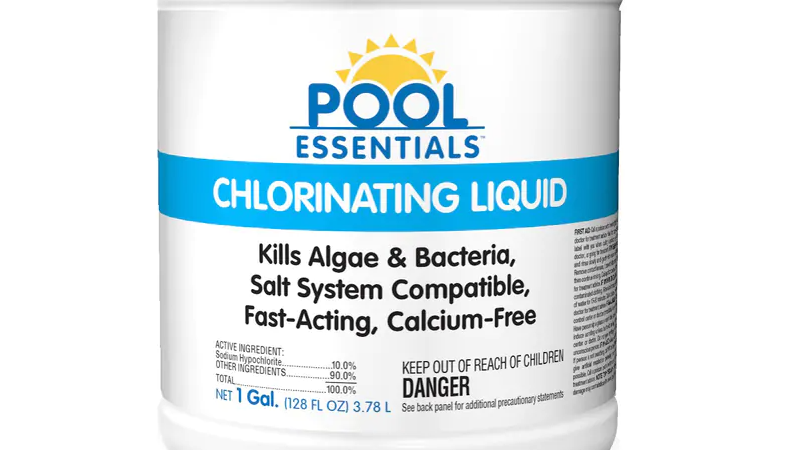
  • Use heavy duty rubber gloves and goggles and keep pool chlorine out of reach of children and pets. Again, I recommend using calcium hypochlorite. It’s easier, a bit safer, lighter in weight, easier to store, and 1 pound of granular chlorine equals 1 gallon (8lbs.) of liquid.
  • Swimming Pool Chlorine


    If you see that your swimming pool has blue-green algae, you must take immediate action in killing the algae.

    First Swimming Pool Care Instructions:

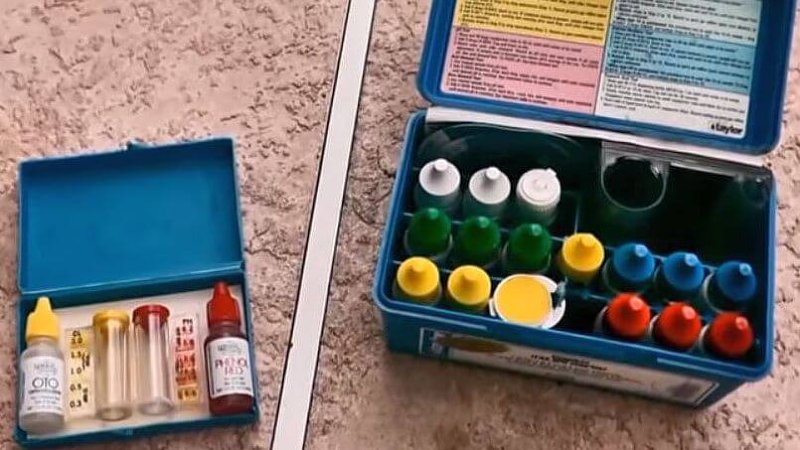
  • Bring the pool pH, pool alkalinity, and calcium hardness into line. Never add chlorine without first adjusting these three. Adjust your pool pH to 7.0-7.2, alkalinity to 80-100, and hardness to 150-250ppm.
  • Brush the bottom, sides, and steps to loosen any swimming pool algae that may be adhering to the surface
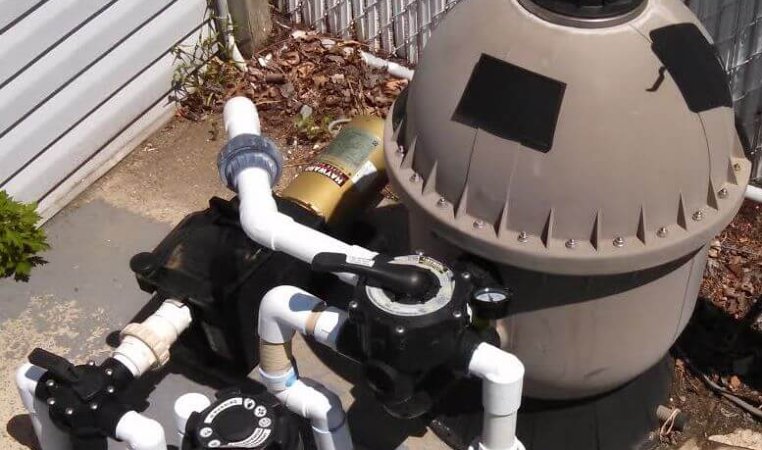
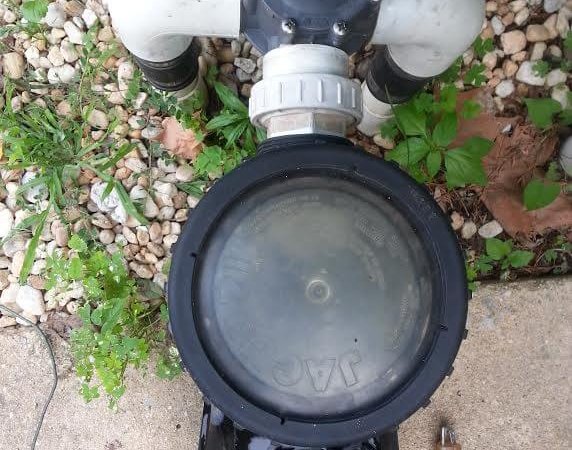
  • Continuously run your filter and be sure to backwash 2 times per day until the water is clear once again.

    If you have a DE filter be sure to re-coat the grids with each backwash.

    blue-green algae,swimming pool algae,algae in pools,green pool water,green algae pool water Keep the water level at least 2" from the bottom of the skimmer.
  • You want to get rid of the dead blue-green algae and algae swimming pool water.

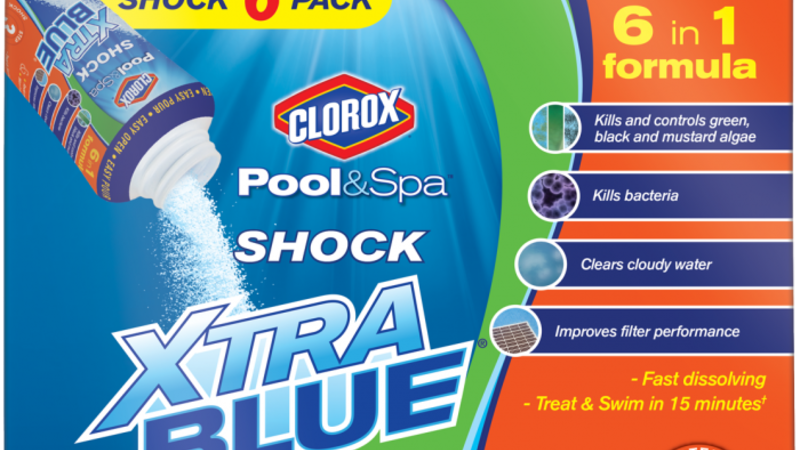
  • Super-chlorinate, or shock, the pool bringing up the chlorine 10 times what you normally run for normal blue-green algae pool water and up to 25 times for a more severe problem. You'll probably have some cloudy pool water but this is normal. Remember that your pool's chlorine demand will be very high.

    If your pool chlorine is 1.0ppm then raise it to 10ppm or above. You must do this in order to kill the algae.

    You must reach that 10ppm or above because if you don’t it’s just wasting time and money.

    To super-chlorinate you must do this all at once, not over a few hours or days. If you're running your chlorine at 1.0ppm and have solid green pool water, then bring it up to 25ppm.

  • There will be dead swimming pool algae on the bottom of the pool. This can be filtered out through vacuuming the bottom of the pool.

    Keep brushing and vacuuming to rid the pool and any residual algae and remember to keep filtering and backwashing to get rid of the swimming pool algae. If you have a DE pool filter, you'll need to re-coat or recharge the grids with each backwash.

    Remember when you have a blue-green algae problem there is no quick fix. It will take time, effort, and patience to clear up your pool.

    When your swimming pool chlorine is down to 1.0ppm-3.0ppm the pool will be safe to swim in once again.

    NEVER allow anyone to swim in the pool until the algae in pool water is gone and the water has cleared up.


    Pool Chlorine For a Good Pool Shock

    1. Take the number of gallons in the pool and multiply by 8.34. This tells you how many pounds of water are in the pool.
    2. Take the number 1,000,000 (a million) and divide it by the answer you have from your first calculation. This will tell you how many parts per million that 1 pound of chemicals will be present in your pool.
    3. Take the number 10 and divide it by the answer you got after the second calculation. This tells you how many pounds of chlorine you will need to add to get 10 ppm.


    Example #1

    Here's an example with a 15,000-gallon pool:

  • 15,000 X 8.34 = 125,100. There are 125,100 pounds of water in a 15,000-gallon pool.
  • 1,000,000 divided by 125,100 = 8, well, close enough. This means each pound of chemicals added to the water will be 8 parts per million.
  • 10 divided by 8 equals 1.25, so you'll need to add about 11/4 pounds of chlorine to get 10 ppm.
  • Example #2

    Here's an 18,000-gallon pool:

  • 18,000 X 8.34 = 150,120. There are 150,120 pounds of water in an 18,000-gallon pool.
  • 1,000,000 divided by 150,120 = 6.66. Again, pretty close so we'll say 6.7. Or if you want easy math, just round it up to 7 to be on the safe side.This means that each pound of chemicals we add to the water, it will be about 6.7 parts per million.
  • 10 divided by 6.7 = 1.49, we'll call 1.5. This means that we need to add about 11/2 pounds of chlorine to get 10 ppm.
  • Or, you can simply go to the swimming pool chlorine page and this will give you the chart you need to shock or super-chlorinate your swimming pool.

    If you want to bring the pool chlorine level up 20-25ppm, then just double the amount of pool chlorine.

    Once you've gotten rid of the blue-green algae, the swimming pool chemistry is balanced, and the pool water maintenance is complete, can take your family swimming once again.


    Go To:

    Swimming Pool Algae From Blue-Green Algae
    Link To Top


    My Free E-Zine Letter

    Subscribe Here For My Monthly E-Zine

    Email

    Name

    Then

    Don't worry -- your e-mail address is totally secure.
    I promise to use it only to send you Bob The Pool Guy


    Related Articles & Links

    Above Ground Covers

    Above Ground Filters

    Asthmatic Bronchitis

    Pool Supplies

    Granular Chlorine

    Brown Algae

    Calcium Hardness

    Calcium Hypochlorite

    Chlorine Demand

    Chlorine Generator

    Chlorine Tablets

    Green Pool Water

    Muriatic Acid

    Natural Pools

    Pool Algaecide

    Pool Alkalinity

    Chlorine Tablets

    Pool Chlorine

    Pool Shock

    Pool Tips

    Red Algae

    Salt Water Pools

    Sodium Hypochlorite

    Pool Chemistry

    Pool Chlorine

    Green Pool Water

    Pool Ionizer

    Pool Vacuums

    Spring Start Up

    Water Mold

    Water Testing Kit

    Water Testing

    Winterization

    Yellow Algae