Why Sodium Hypochlorite Liquid Chlorine Is The Best Pool Shock
If you need to shock your pool, or for weekly maintenance, there's really nothing better than sodium hypochlorite. Commonly called bleach, it's one of the world's most popular forms of chlorine and a perfect way to sanitize your pool water. It's known as liquid chlorine and is used in both home and commercial pools. And we're going to find out why.
What Is Chlorine?
Chlorine is a naturally occurring chemical and is one of the building blocks of matter. Chlorine is an important nutrient for plants and animals and provides clean drinking water to people by killing the bacteria and viruses that can make us sick. Chlorine has also been used for decades in home disinfectants.
Why Does My Pool Need Chlorine?
Our pools needs a sanitizing agent to kill off algae spores, bacteria, viruses, and everything else that falls into the pool. The chemical sanitizing agent of choice for millions of pool owners is chlorine, or more specifically, sodium hypochlorite. We expect the chlorine in our pools to do three things, and they are to:
- Sanitize
- Oxidize
- Kill organic matter in our pool
Chlorine is the main compound we use to accomplish this.
What Is Sodium Hypochlorite?
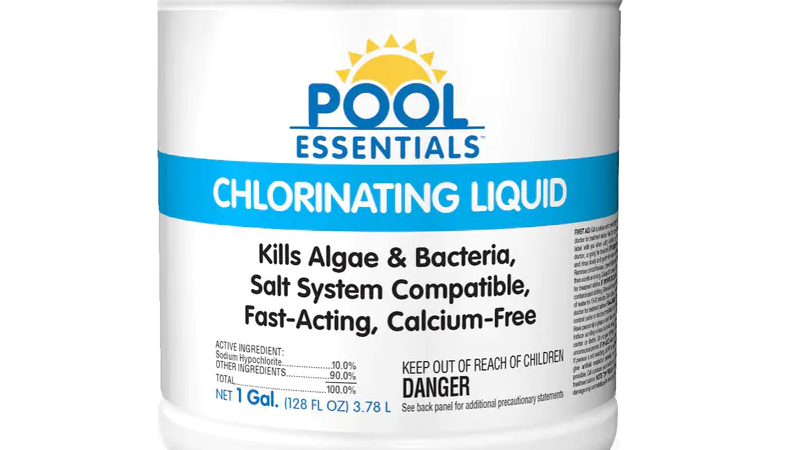
Sodium hypochlorite (liquid pool chlorine/swimming pool shock) has a nice yellowish color. It's stronger, but chemically identical, to regular grocery store bleach. Chlorine's concentration is 10 – 15% available chlorine while bleach is about 8.5%. Liquid swimming pool chlorine is the choice of many pool owners. It produces an excellent cleaning agent when it comes in contact with water.
It can be poured directly into the pool but, is recommended by many pool experts to first dilute the Sodium Hypochlorite in water. The best way to add liquid swimming pool chlorine is to start in the deep end of the pool and walk it around the perimeter. You'll need to brush the pool very well after applying as sodium hypochlorite is heavier than water and will sink to the bottom and possibly stain your pool surface.
What Does Sodium Hypochlorite Do For My Pool?
Let's keep it really simple and just say it kills stuff. This "stuff" could be algae spores, bacteria, bugs, and swimmer waste such as sweat, spit, oils, and urine. The chlorine attaches itself to this organic matter and kills it. Pretty simple, right?
You'll want to avoid contact with liquid swimming pool chlorine. It can bleach out clothes and may cause burns if not properly handled. Most commercial indoor pools use liquid chlorine. It seems to be more convenient to have big 55 gallon drums filled with pool chlorine. Some commercial indoor pool systems are automated which makes it even easier to have the swimming pool care consistent. Liquid pool chlorine has a shelf life of about 1 year, and after that it will rapidly degrade. Keep it out of direct sunlight or it will degrade even faster. The pool test kit of choice for professionals is the Taylor K-2006.
How Much Liquid Chlorine Do I Need?
First thing we need to know is how big our pool is, or in other words, how many gallons of water our pool holds. Next, we should test our chlorine level to determine the starting point, or where our current chlorine level is. Then we need to buy enough liquid chlorine for our pool's sanitizing needs, whether this is for shocking our pool or for weekly maintenance. Most sodium hypochlorite products we buy will be for 10,000 gallons of pool water, so we should gauge our chlorine needs from that.
Always follow the manufacturer’s instructions for how much sodium hypochlorite to add to increase the chlorine level up to the desired level.
Benefits Of Liquid Chlorine
Let's look at some of the benefits of using sodium hypochlorite, or as we know it, liquid chlorine.
Works Immediately
Liquid chlorine starts to kill organics in the pool as soon as it enters the water.
Available In Refillable Jugs
Get it, use it, and return the jug to the pool store to have it refilled. Much less waste because you're reusing the same jugs over and over again.
Concentrated Amount
Most liquid chlorine you find in your pool store will contain anywhere to 10% - 15% active sodium hypochlorite.
Availability
You'll be able to find liquid at your local pool store. If they're closed and you're in a pinch, you can go to the grocery store and buy some unscented bleach which works perfectly.
Affordable
Liquid chlorine is many times less expensive than chlorine granules, or calcium hypochlorite. This is one of the reasons commercial pools choose sodium hypochlorite.
Low Hardness Level
Unlike calcium hypochlorite, liquid chlorine will not raise your calcium hardness level. This is good for places that have hard fill water.
Drawbacks Of Liquid Chlorine
Not everything in life is perfect, and that includes our pool chemicals. Let's take a look at some drawbacks of sodium hypochlorite.
Weight
1 gallon of pool chlorine weighs 8.5 lbs. Some pool owners find that carrying around a 2.5 gallon container of chlorine might be a bit unwieldy.
Chlorine Smell
Sodium hypochlorite does smell like chlorine and some may find the odors are too much.
Chemical Reactiveness
Sodium hypochlorite must be kept away from other chemicals, especially granular chlorine such as calcium hypochlorite. If these two are mixed, a chemical explosion can occur.
Pool Staining
Liquid chlorine can stain your pool surface if your pool is not properly swept after adding it.
Sodium Hypochlorite Care and Safety
We're dealing with pool chemicals and they can be unforgiving, so the utmost care must be taken. Always take the proper precaution in dealing with pool chlorine or bleach, and for that matter, any kind of swimming pool chemical. Remember to read the manufacture’s labels. Use heavy duty rubber gloves and goggles and keep pool chlorine out of reach of children and pets. Also, be sure to store your sodium hypochlorite away from other chemicals.
Liquid pool chlorine is unstabilized. You'll need to keep an eye on your cyanuric acid level. Cyanuric acid is the stabilizer of your chlorine and you’ll want to keep the level between 30 -50 ppm. One of the best ways to add cyanuric acid to you pool is with chlorine tablets.
Become A Sodium Hypochlorite Pool Pro
Whether you've had a pool for 20 years, or are just starting out, sodium hypochlorite is a great alternative for your pool's disinfecting needs. If you've never tried it before, you might might be in for a pleasant surprise. Give it a try and see if it can't give you a sparkly perfect pool.
