How To Balance The Calcium Hardness Level In Your Pool
Feed the Beast!! Feed the Beast!! Water is hungry like that old Hungry Hippo game. Maybe I'm dating myself? Meh, but the point is this. Water will try to feed its appetite for calcium any way it can. Many times it will draw it from the plaster, which causes unsightly pitting, or from your filtration system, which will cause hard water deposits. Maintaining your pool's calcium hardness level between 150 ppm - 250 ppm will prevent this from happening. Some areas of the country may have very soft water or very hard water.
The ideal range for your pool's calcium hardness level is 150 ppm-250 ppm, not 350 - 400 ppm or higher. This is especially true for saltwater pools and salt water pool system. If you add any more calcium hardness increaser, your salt cells might calcify and burn up, shortening its life. You also run the risk of having hard water scale at the water line.
You don't need take your tap water anywhere and have expensive tests performed. Simply call your local water company and ask them the calcium hardness of the water or use a good pool water test kit. Central Oregon has very soft water, about 3 ppm. Places like Arizona, Nevada, and here in Florida might have water hardness that can reach 200 ppm - 300 ppm or even higher!!
What Is Calcium Hardness?
Your pool's calcium hardness is a measurement of the amount of calcium ions that can be found in your pool water. It's basically a hard mineral content. The minerals can be made up of calcium, magnesium carbonates, and others. The total hardness of the water consists of magnesium hardness and calcium hardness. Calcium is good for our pools and good for us. But too much can cause problems that we don't want.
What The Best Calcium Hardness Level?
The best answers are the simplest. You'll want to maintain your calcium hardness level in your pool at 150 - 250 ppm. This should be fairly easy to do. Keeping the correct level of calcium hardness is mainly for plaster pools. Plaster contain calcium carbonate and if the hardness level gets too low, the water will start to basically eat away at the plaster and try to satisfy its hunger for calcium. It's for this reason we want to maintain our calcium hardness in the correct range. But as always, follow your manufacturer's recommendations if you have a fiberglass or vinyl pool.
What If I Already Have Hard Water?
If you live in the 100,000 places that have hard water, it's best to stay away from anything that will raise it. Reduce or eliminate the use of calcium hypochlorite chlorine. And never use calcium chloride which is used, in and of itself, to raise calcium hardness. Maintaining a lower calcium hardness level might be a challenge when you already have hard fill water. Reducing calcium hardness is difficult. You may either replace some or all of your pool water or have pool water trucked in. When filling your pool with fresh water, be sure to test the tap water for its hardness. This will give you a good starting point to see if you need to add calcium chloride or not. Unfortunately there is no quick and easy fix on lowering your swimming pool's hard water.
However, there is good news. Remember the video above? About how pH affects your pool's calcium hardness? You can maintain a lower pH of 7.2 - 7.4. This will keep the pool water a little more on the acidic side and decrease the chances of the pool's calcium hardness falling out of solution.
How To Lower The Calcium Hardness In Your Pool
There are a couple of options to lower your pool's calcium hardness. Of course, this is after you've tested your water.
- Drain some water and refill: This is the best option, but you may not want to fill from your water source. Check out the many places that have pool water delivery services. This water has already been treated and is ready to go in your swimming pool.
- Mobile Reverse Osmosis for Swimming Pools: Yeah, this one is really cool. A truck pulls up to your house that contains filters. One hose from the truck is placed in the shallow end of your pool. This is the return hose. The other hose goes in the deep end. The deep end hose is the suction side that carries the water through the filters in the truck and reduces the hardness of the water. Some of these filters are equipped to also reduce metals and stabilizer. The shallow end hose returns the treated water back to the pool. The entire process can take about 2 hours to treat a 20,000 gallon pool. These mobile RO units have been known to effectively reduce a pool's calcium hardness level by more than 75%. Now that's effective!!
How To Raise The Calcium Hardness In Your Pool
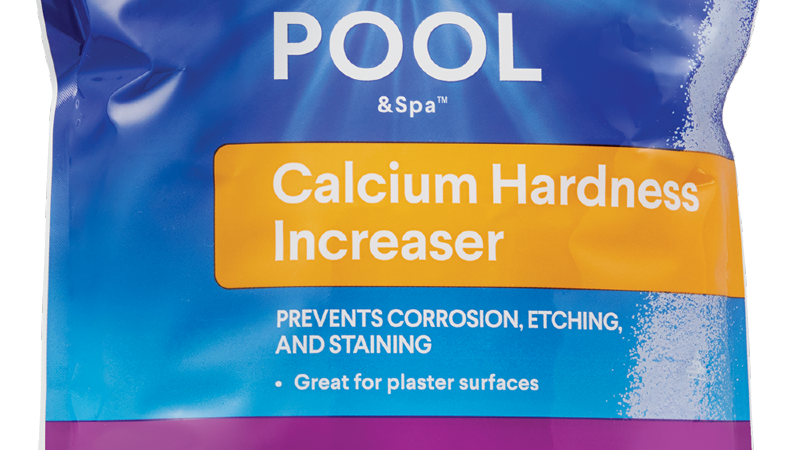
Ah, this is the one I love!! You see, we can ALWAYS add more calcium hardness increaser to the pool to get it in the correct range of 150 - 250 ppm. Taking out calcium hardness, well, that one is a little tricky. If you're one of the lucky few that have soft fill water, your best option for raising the calcium hardness in your pool is calcium chloride. This chemical is readily available in any pool store or can be found online.
How To Maintain The Right Calcium Hardness Level In My Pool
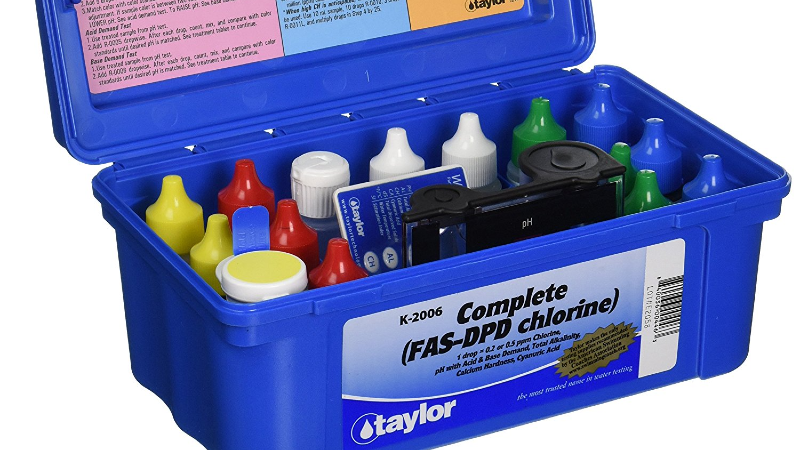
First is to test test and test. But we need a good test kit. Since starting in the pool industry in 1999, I've used and recommend the Taylor K-2006 pool water test kit. This kit will give you the chemical numbers you need. So we should:
- Clean our pools twice per week
- Take our chemicals readings and balance our pools
- Make the right adjustments when needed
Let's be proactive and take care of business when it happens.
One Last Thought About Calcium Hardness
Pool maintenance is one of the fun parts of having a pool and diligence is needed if we expect perfect results. A perfect pool doesn't happen by accident. And the longer we let the water chemistry slip by, the more problems and trouble we'll have with our calcium hardness.
The work pays off. And it shows by your crystal clear water.
What Other Visitors Have Said
Click below to see contributions from other visitors to this page...
Large Amounts Of Calcium On Pool Walls 
We have a two month old salt water pool with beadcrete plaster. About 3 weeks ago we noticed a buildup on the polaris that looked like sand particles. …
Fiber Tech Liner 
I had my concrete pool covered with a product called Fiber Tech when it was time for resurfacing.
The website talks about calcium levels but says "not …
Calcium problem Not rated yet
Calcium problem
by Julie
(Atlanta)
We have a large saltwater pool with a hot tub that we heat frequently. We had the pool put in about 2 years ago. …
High Calcium Hardness Not rated yet
High Calcium Hardness
by David Doig
(Hindly Pheonix Wigan)
I have just recently started a job to help maintain the swimming pool water. The swimming …
Build Up Of Mineral Deposits On The Tiles Not rated yet
Build Up Of Mineral Deposits On The Tiles In The Pool At The Water Line
by Lynn
(Tucson, AZ)
Our small community pool (serves an HOA of 50 homes) …
Total Calcium Hardness Not rated yet
What can be done to remove the rough surface on the pool walls. I have a 2 year old gunite pool and I have kept all the chemical readings within the parameters …
Correct Level for Calcium Hardness Not rated yet
In your u-tube video from January, 2014, you state that the correct level for calcium hardness should be 150-250 ppm and that 250-500 ppm is too high. …
You might like these
Swimming Pool Resources For Beginners & eBooks
Swimming Pool Resources Offers Your Swimming Pool Maintenance Tips Along W/ eBooks & Consultations.
Your Complete Guide To Pool Water Testing
Pool water testing is the cornerstone of your pool. Learn how, when, and why you should always test your pool water and how to fix it.
Beginner's Guide To Basic Pool Chemistry
Balancing Your Pool's Chemicals Is The Key To Clean and Safe Water. Learn How, What, and When To Add Chemicals To Your Pool.
Pool Water Delivery To Refill Your Pool Quickly and Cheaply
Choosing a good pool water delivery service in your area that works for you is important when you want to keep your pool full and your budget in check.