- Home
- Troubleshooting
- Black Algae Pool
How to Get Rid of Black Algae in Your Pool: 13-Step Removal Guide
Black algae ruining your pool? This guide shows you exactly how to kill it and keep it gone for good.
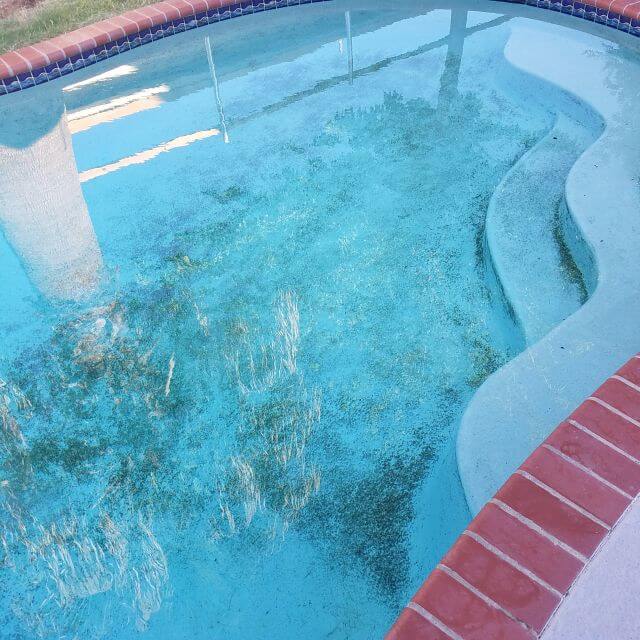 Black Algae On Steps & Bottom
What Is Black Algae in Swimming Pools?
Black algae is a tough type of bacteria called cyanobacteria. Unlike other forms of pool algae that contain chlorophyll, this little guy forms layers and each layer forms a scab. It looks like dark spots or patches on your pool walls and floor. Unlike green algae, black algae has deep roots that dig into pool surfaces. This makes black algae in pools very hard to remove.
The dark color comes from a protective layer on top. This layer shields the algae from chlorine and other chemicals. That's why regular pool treatments often don't work on black algae.
How Does a Pool Get Black Algae?
Your pool can get black algae from several sources. Swimsuits and toys used in lakes or oceans can bring it in. Low chlorine levels let algae grow fast. Poor water flow creates dead spots where algae thrives. Rough pool surfaces give algae roots a place to grip.
🏊 Pro Tip #1: Always rinse swimsuits and pool toys with fresh water after using them in natural bodies of water. This simple step prevents pool algae from entering your pool.
Why Testing Your Pool Water Matters
Before you treat black algae, you must test your water. Use the Taylor K-2005 or Taylor K-2006 test kit for accurate results. These professional kits measure everything you need.
Test these five levels:
- Chlorine: Should be 2-4 ppm (parts per million)
- pH: Keep between 7.2-7.8
- Alkalinity: Maintain 80-120 ppm
- Calcium Hardness: Aim for 200-400 ppm
- Stabilizer (Cyanuric Acid): Keep at 30-50 ppm. Salt pools can have a CYA from 50-70 ppm.
Proper water balance helps chemicals work better. Wrong levels mean wasted money and time fighting swimming pool algae.
🔬 Pro Tip #2: The Taylor K-2006 kit includes a FAS-DPD chlorine test. This gives you more accurate readings at high chlorine levels during shock treatment.
13 Steps to Kill Black Algae in Your Pool
Follow this black algae removal process for a 10,000-gallon pool:
- Test your water using your Taylor test kit. Record all levels.
- Balance your pH to 7.2-7.4 using muriatic acid (lower) or soda ash (raise). Use about 1 quart of acid or 1 pound of soda ash per 0.2 pH change.
- Adjust your CYA to 30-50 ppm or 50-70 ppm for salt pools.
- Adjust alkalinity to 80-100 ppm with sodium bicarbonate. Add 1.5 pounds per 10 ppm increase needed.
- Scrub all black spots hard with a stainless steel brush (for concrete) or nylon brush (for vinyl). Break through the protective layer.
- Clean your filter thoroughly. Backwash or clean cartridges to remove algae particles.
- Increase your chlorine level to 20 ppm using liquid chlorine. 1 gallon will increase the chlorine level to 10 ppm. You can also use calcium hypochlorite shock. For 10,000 gallons, use 1.5 pounds of calcium hypochlorite.
- Run your pump motor 24 hours to circulate chemicals everywhere.
- Brush again the next morning. Hit every black spot hard.
- Vacuum dead algae to waste (bypass the filter) to remove debris.
- Test and shock again if spots remain. Repeat daily until clear.
- Clean the filter again once algae is gone.
- Maintain high chlorine (5-10 ppm) for one week, then return to normal levels.
🔬 Pro Tip #3: Apply shock at night. Sunlight breaks down chlorine fast. Shocking after dark gives chemicals 8+ hours to work on black algae.

Money-Saving Tips for Black Algae Treatment
💰 Tip 1: Buy calcium hypochlorite shock in bulk 25-pound buckets. You'll save 40-50% compared to individual bags. Stores like Costco and Sam's Club offer great deals.
💰 Tip 2: Use trichlor tablets for maintenance instead of expensive specialty products. They keep chlorine levels steady and prevent algae growth between treatments.
💰 Tip 3: Clean your filter regularly. A dirty filter makes your pump work harder and wastes chemicals. Good filtration saves money on both electricity and pool supplies.
Special Considerations for Saltwater Pools
Saltwater pools can still get black algae. Your salt chlorine generator makes chlorine, but it may not produce enough during an outbreak.
For saltwater pools:
- Boost your generator to maximum output
- Add calcium hypochlorite or liquid chlorine shock manually (same amounts as above)
- Check your chlorine salt cell for buildup that reduces chlorine production
- Use non-copper algaecides like Pool Mate Algaecide 60 to protect equipment
- Test salinity levels—aim for 2700-3400 ppm
If you choose to use liquid chlorine (sodium hypochlorite) in saltwater pools, remember to test your pH as it may increase it.
How to Prevent Black Algae From Coming Back
Prevention beats treatment every time. Keep your pool algae free with these habits:
- Test water weekly with your Taylor K-2005 or K-2006 kit
- Keep chlorine at 2-4 ppm consistently
- Brush walls and floors weekly, even without visible algae
- Run your pump 8-12 hours daily for good circulation
- Shock monthly as maintenance
- Add algaecide weekly during warm months
- Rinse all swimwear and toys used in natural water
- Keep your filter clean. If you have a cartridge filter, make sure you take it out and clean it well. If your cartridge filter has over 3000 filter hours on it or it's more than 3 years old, it's time to replace it.
Frequently Asked Questions
Q: What causes black algae in swimming pools?
Black algae enters pools from contaminated swimwear, toys, or equipment used in lakes and oceans. Low chlorine, poor circulation, and rough surfaces help it grow.
Q: How long does it take to get rid of black algae?
Expect 1-2 weeks of daily treatment. Severe cases may take longer. Consistent brushing and shocking speed up the process.
Q: Is black algae harmful to swimmers?
Black algae itself isn't toxic, but it creates rough surfaces that harbor harmful bacteria. Don't swim until treatment is complete.
Q: Why doesn't regular chlorine kill black algae?
Black algae has a protective outer layer that blocks chlorine. You must physically brush this layer off before chemicals can reach the roots.
Q: Can I use bleach instead of pool shock?
Household bleach works but is weaker than pool shock. You'd need about 1 gallon of bleach to equal 1 pound of calcium hypochlorite shock, making it less cost-effective for black algae.
Conclusion
Removing black algae takes effort, but following these 13 steps will clear your pool. Test your water, brush aggressively, shock heavily, and stay consistent. With proper prevention habits, you'll keep black algae away for good and enjoy crystal-clear water all season.
Have A Question, Story, Or Comment?
If you have a chemical related issue, please give the chemicals readings, type of filtration system, what you've done or are trying to do, etc..
Chlorine
pH
Alkalinity
Hardness
Cyanuric Acid
Sand, Cartridge, DE Filter
Please explain your issue thoughtfully. By giving me all the details, it makes it much easier to answer your question and helps others that may have similar issues.
Thank you
What Other Visitors Have Said
Click below to see contributions from other visitors to this page...
Black Algae in Fiberglass Pool 
All of the web sites I have read tell me to use a steel wire brush first prior to treatment. I have a fiberglass pool and am afraid that if I use a wire …
Black Mold and Pool Ionizer Not rated yet
Black Mold and Pool Ionizer
by Thomas
I have an Ion pool with a vinyl liner that was installed approximately 2 years ago.
Recently I have noticed …
Black Algae in my 20,000 gallon fiberglass pool Not rated yet
Over a 2 week period of time, I have emptied two bottles of black algae killer which looks blue when it is poured in with the skimmer working. I have …
You might like these
Swimming Pool Resources For Beginners & eBooks
Swimming Pool Resources Offers Your Swimming Pool Maintenance Tips Along W/ eBooks & Consultations.
How to Fix a Green Salt Water Pool
How to remove the algae in your salt water pool and learn how to prevent it. Get rid of the algae in your pool today and enjoy your clear pool tomorrow.
How To Get Rid Of Yellow Algae a.k.a. Mustard Algae In A Pool
Does your pool have yellow algae, sometimes known as mustard algae? Take your swimming pool back and learn how to easily clear it up.
How To Clear Green Pool Water In 5 Days Or Less
No worries if you have green pool water or an algae problem. With just a few steps and some chemicals you'll be swimming in no time.
The Truth About Phosphates In Pool Water
Do you really need a phosphate remover in your pool? Learn the truth and why you should save your money.